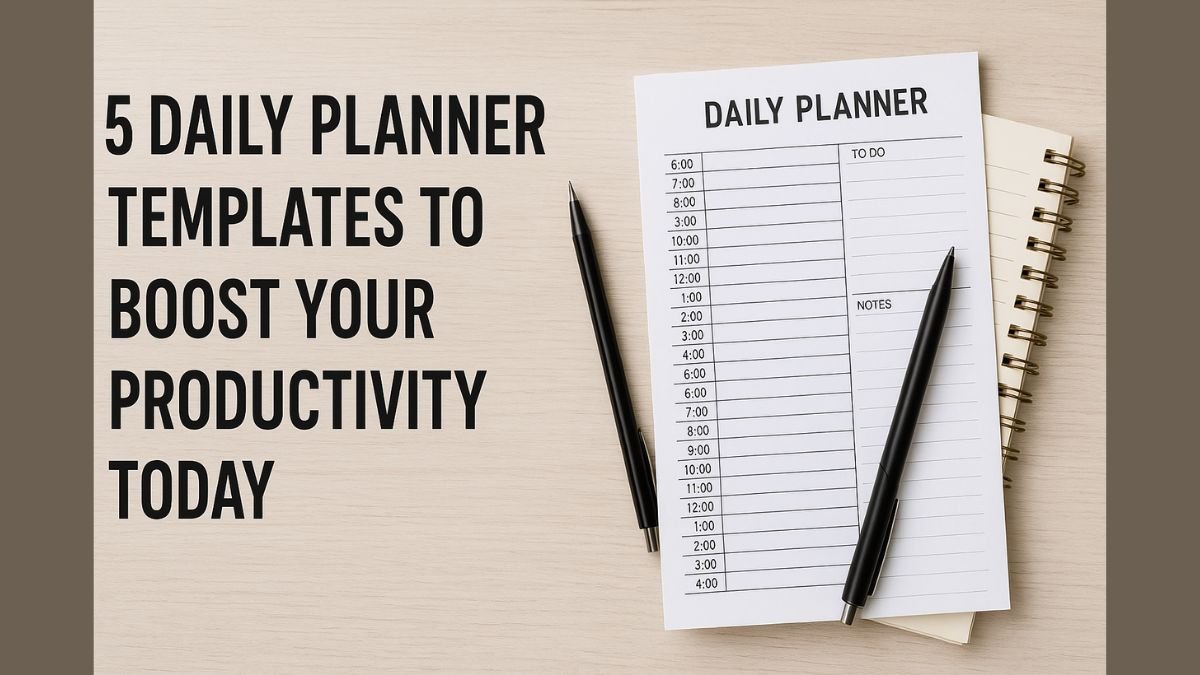
In 2025, productivity is about working smarter, not harder. A daily planner template provides the structure you need to organize your time, prioritize tasks, and align your day with your goals, much like high-achievers such as Elon Musk who rely on disciplined scheduling. Whether you prefer paper or digital formats, the right template can transform your routine. This guide presents 5 daily planner templates designed to boost your productivity today, with practical tips on how to use them effectively for various lifestyles.
Why Use a Daily Planner Template?
A daily planner template offers a pre-designed framework to manage tasks, schedules, and goals without starting from scratch. By streamlining planning, it saves time, reduces mental clutter, and helps you focus on execution. Below, we outline five versatile templates—available for paper or digital use—that cater to different needs, from entrepreneurs to students to busy parents.
1. Time-Blocked Professional Template
Best For: Entrepreneurs, professionals, and anyone needing structured time management.
Description: This template divides your day into hourly or 30-minute blocks, inspired by Elon Musk’s meticulous scheduling. It includes sections for tasks, meetings, and breaks, with a focus on high-priority activities.
Template Structure:
- Header: Date, top 3 priorities
- Time Blocks: 6 AM–10 PM, with 30-minute increments
- Sections: Tasks (with priority markers), notes, daily reflection
- Extras: Goal alignment check (e.g., “How do today’s tasks support my goals?”)
How to Use It:
- Fill in time blocks the night before, assigning tasks like “Client call: 10–10:30 AM” or “Deep work on project: 2–4 PM.”
- Mark top 3 priorities (e.g., “Finalize proposal”) and focus on them first.
- Use a digital version like Daily Planner for drag-and-drop flexibility and reminders.
Why It Boosts Productivity: Time-blocking ensures every minute is purposeful, minimizing distractions and maximizing focus on high-impact tasks.
2. Student Study Planner Template
Best For: Students balancing classes, assignments, and extracurriculars.
Description: Tailored for academic life, this template organizes class schedules, study sessions, and deadlines while leaving room for personal time.
Template Structure:
- Header: Date, daily goal (e.g., “Complete math homework”)
- Sections:
- Class schedule (e.g., “Calculus: 9–10 AM”)
- Study blocks with subjects and tasks
- Assignment tracker (due dates, progress)
- Personal time (e.g., exercise, hobbies)
- Extras: Weekly review section for upcoming exams
How to Use It:
- Input your class schedule and block study time for each subject (e.g., “Physics review: 3–4 PM”).
- Track assignments with deadlines and mark progress (e.g., “Essay draft: 50% done”).
- Schedule breaks to avoid burnout, like “30-minute walk at 6 PM.”
Why It Boosts Productivity: It keeps academic and personal tasks organized, helping students stay on top of deadlines while maintaining balance.
3. Goal-Oriented Entrepreneur Template
Best For: Entrepreneurs and side hustlers working toward big goals.
Description: This template aligns daily tasks with long-term objectives, combining goal tracking, task prioritization, and time-blocking for strategic focus.
Template Structure:
- Header: Date, daily focus (e.g., “Grow client base”)
- Sections:
- Long-term goal reminder (e.g., “Launch product by Q3”)
- Top 3 tasks tied to goals (e.g., “Email 5 prospects”)
- Hourly schedule for tasks and meetings
- Notes for brainstorming or ideas
- Extras: Progress tracker for weekly milestones
How to Use It:
- Write your long-term goal at the top to stay motivated.
- List daily tasks that move you closer to that goal, like “Research competitors: 9–10 AM.”
- Use a digital planner like Daily Planner to set goal reminders and track progress.
Why It Boosts Productivity: It ensures daily actions align with big-picture goals, keeping entrepreneurs focused and accountable.
4. Minimalist Task List Template
Best For: Busy individuals who want simplicity and flexibility.
Description: A clean, no-frills template focusing on tasks and priorities, ideal for those who prefer a straightforward approach without complex layouts.
Template Structure:
- Header: Date, one-word focus (e.g., “Efficiency”)
- Sections:
- Top 3 priorities (e.g., “Finish report, call client”)
- Secondary tasks (e.g., “Reply to emails”)
- Notes or “Do Not Do” list (e.g., “Avoid social media”)
- Extras: Checkbox for completed tasks
How to Use It:
- List your top 3 priorities each morning, tackling them first.
- Add secondary tasks as time allows, keeping the list short (5–7 items).
- Use a paper notebook or a digital tool for quick edits and portability.
Why It Boosts Productivity: Its simplicity reduces planning time, letting you focus on execution while still prioritizing key tasks.
5. Family and Wellness Planner Template
Best For: Parents, caregivers, or anyone balancing family and self-care.
Description: This template blends work, family, and wellness tasks, ensuring a balanced day with time for personal health and household responsibilities.
Template Structure:
- Header: Date, daily intention (e.g., “Balance and calm”)
- Sections:
- Work tasks (e.g., “Team meeting: 11 AM”)
- Family tasks (e.g., “Pick up kids: 3 PM”)
- Wellness tasks (e.g., “Yoga: 7 AM”)
- Meal planning and errands
- Extras: Habit tracker (e.g., water intake, exercise)
How to Use It:
- Schedule work and family tasks in time blocks, ensuring overlap is minimized.
- Add wellness tasks like “Meditate: 8 PM” to prioritize self-care.
- Track habits like drinking water or family time to build consistency.
Why It Boosts Productivity: It creates harmony between work, family, and health, preventing burnout and ensuring all priorities are addressed.
How to Implement These Templates
- Choose Your Format: Decide between paper (e.g., printable templates, notebooks) or digital (e.g., apps like Daily Planner). Digital is great for syncing and reminders; paper offers a tactile, distraction-free experience.
- Customize for Your Needs: Adjust the template to fit your lifestyle—add or remove sections like habit trackers or notes.
- Plan Daily: Spend 5–10 minutes each morning or evening filling out your template. Focus on priorities and realistic time blocks.
- Review Weekly: Check your progress weekly to refine your approach, ensuring the template evolves with your needs.
- Stay Consistent: Use the template daily for at least two weeks to build a habit and see results.
Pro Tip: For digital users, Daily Planner offers customizable templates that sync across devices, making it easy to implement any of these layouts with time-blocking and goal-tracking features.
Why These Templates Work
These five templates—Time-Blocked Professional, Student Study Planner, Goal-Oriented Entrepreneur, Minimalist Task List, and Family and Wellness Planner—cater to diverse lifestyles while promoting productivity through structure and focus. They draw on proven strategies like time-blocking and prioritization, inspired by high-achievers, to help you make every day count.
Start with one of these templates today, whether on paper or through a digital tool like Daily Planner, and watch your productivity soar in 2025.

Hi, I’m Sam Thomas. I love writing about productivity and simple ways to stay organized in daily life. Through this blog, I share practical tips, planners, and ideas that have helped me stay on track. My goal is to make planning easy and useful for everyone.