- Why a Daily Planner Is Essential for Job Hunting
- 1. Create a Job Search Overview Dashboard
- 2. Time-Block Daily Job Search Activities
- 3. Track Applications and Follow-Ups
- 4. Plan Networking and Outreach
- 5. Prep for Interviews Systematically
- 6. Track Your Progress and Wins
- 7. Schedule Self-Care to Avoid Burnout
- 8. Set Weekly Job Search Goals
- 9. Organize Resources and Research
- 10. Plan for Rejections and Next Steps
- Tips for Job Searching with a Daily Planner
- Why a Daily Planner Wins Your Job Search
- Related Posts
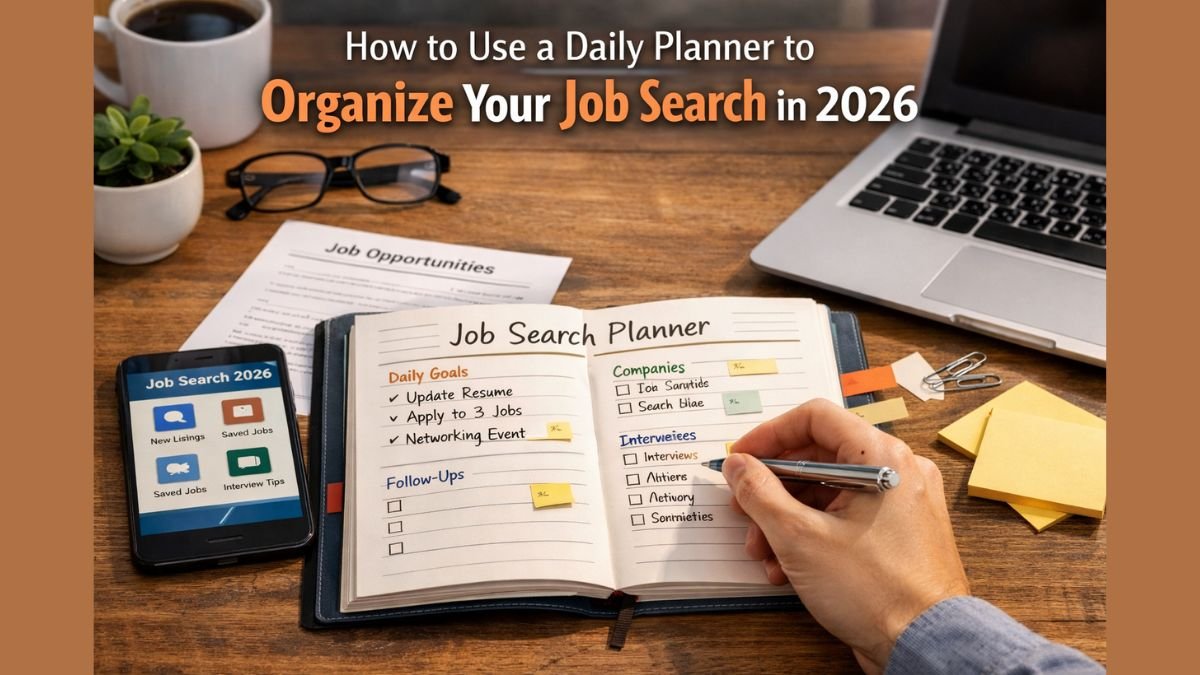
How to Use a Daily Planner to Organize Your Job Search
Job searching in 2026 is a full-time job itself — applications, networking, interviews, follow-ups, and the emotional rollercoaster. Without structure, it’s easy to burn out or miss opportunities. A daily planner turns chaos into a strategic campaign, keeping you consistent, accountable, and ahead of the game. Inspired by the disciplined routines of high-achievers like Elon Musk, this guide shows how to use a daily planner to organize your job search with 10 practical strategies.
Why a Daily Planner Is Essential for Job Hunting
A job search involves hundreds of moving parts: applications, contacts, deadlines, and prep. A daily planner centralizes everything, tracks progress, and maintains momentum during rejections. Below are 10 ways to make your planner your job search command center.
1. Create a Job Search Overview Dashboard
Start with a big-picture view to track applications and stages.
How to Do It:
- Dedicate a page for an overview: list target companies, roles, application dates, and statuses (Applied, Interview, Follow-up Needed).
- Add columns for contacts, salary expectations, and notes.
- Update weekly and review daily.
Why It Helps: A dashboard prevents forgotten applications and shows progress.
2. Time-Block Daily Job Search Activities
Treat job hunting like a job — block dedicated time every day.
How to Do It:
- Schedule 1–2 hours daily, e.g., “Job search: 9–11 AM.”
- Break into focused blocks: 30 min applications, 20 min networking, 40 min prep.
- Use a digital planner like Daily Planner for recurring blocks and reminders.
Why It Helps: Consistent time ensures steady progress without overwhelm.
3. Track Applications and Follow-Ups
A planner keeps you on top of submissions and next steps.
How to Do It:
- Log each application: company, role, date applied, link, and notes.
- Schedule follow-ups, e.g., “Follow up with XYZ Corp: 1 week after application.”
- Set reminders for responses or additional materials.
Why It Helps: Tracking prevents missed opportunities and shows where to focus.
4. Plan Networking and Outreach
Networking is key — use your planner to make it consistent.
How to Do It:
- Block outreach time, e.g., “LinkedIn messages: 20 min daily.”
- Track contacts: name, company, connection date, follow-up needed.
- Schedule coffee chats or informational interviews.
Why It Helps: Planned outreach builds your network systematically.
5. Prep for Interviews Systematically
A planner ensures you’re ready and confident for every interview.
How to Do It:
- Block prep time before interviews, e.g., “Research company: 1 hour pre-call.”
- Create checklists: common questions, your stories, questions to ask.
- Log post-interview notes: what went well, follow-up actions.
Why It Helps: Preparation reduces anxiety and improves performance.
6. Track Your Progress and Wins
Visibility on progress keeps motivation high during long searches.
How to Do It:
- Log daily/weekly metrics: applications sent, connections made, interviews scheduled.
- Note wins, like “Great feedback from interview” or “New referral.”
- Use a progress tracker for total applications or stages advanced.
Why It Helps: Tracking turns abstract effort into tangible momentum.
7. Schedule Self-Care to Avoid Burnout
Job searching is emotional — a planner protects your well-being.
How to Do It:
- Block non-negotiable self-care, like “Exercise: 30 min” or “Break: No job search after 8 PM.”
- Include downtime or hobbies to recharge.
- Track mood or energy to spot burnout early.
Why It Helps: Self-care sustains energy for the long haul.
8. Set Weekly Job Search Goals
A planner aligns daily actions with weekly targets for steady progress.
How to Do It:
- Set goals, like “Send 10 applications” or “Make 5 new connections.”
- Break into daily tasks and block them.
- Review Sundays: what worked, adjust for next week.
Why It Helps: Weekly goals create measurable momentum.
9. Organize Resources and Research
A planner centralizes job search materials for quick access.
How to Do It:
- Note resources: resume versions, cover letter templates, company research.
- Block research time, e.g., “Tailor resume for role: 30 min.”
- Track skills to highlight or gaps to fill.
Why It Helps: Organization saves time and reduces prep stress.
10. Plan for Rejections and Next Steps
A planner helps you bounce back and stay proactive.
How to Do It:
- Log rejections with notes: “What to improve” or “Follow up in 6 months.”
- Schedule next actions immediately, like “Apply to similar roles.”
- Reflect on learnings to refine your approach.
Why It Helps: Resilience turns setbacks into growth.
Tips for Job Searching with a Daily Planner
- Choose Your Planner: Paper for notes during calls or digital like Daily Planner for reminders and syncing.
- Start Small: Begin with 1 hour daily and tracking applications.
- Plan Weekly: Review progress and set goals every Sunday.
- Stay Consistent: Treat job search blocks as unbreakable.
- Make It Positive: Celebrate applications sent and connections made.
Why a Daily Planner Wins Your Job Search
A daily planner transforms job searching from overwhelming to strategic, keeping you organized, motivated, and proactive. By tracking applications, scheduling tasks, and protecting well-being, it ensures you land the right role faster. In 2026, take control of your career — one planned day at a time.
For a seamless digital experience, try Daily Planner, with customizable trackers, reminders, and templates to supercharge your job search. Your dream job is waiting — plan for it today.

Hi, I’m Sam Thomas. I love writing about productivity and simple ways to stay organized in daily life. Through this blog, I share practical tips, planners, and ideas that have helped me stay on track. My goal is to make planning easy and useful for everyone.