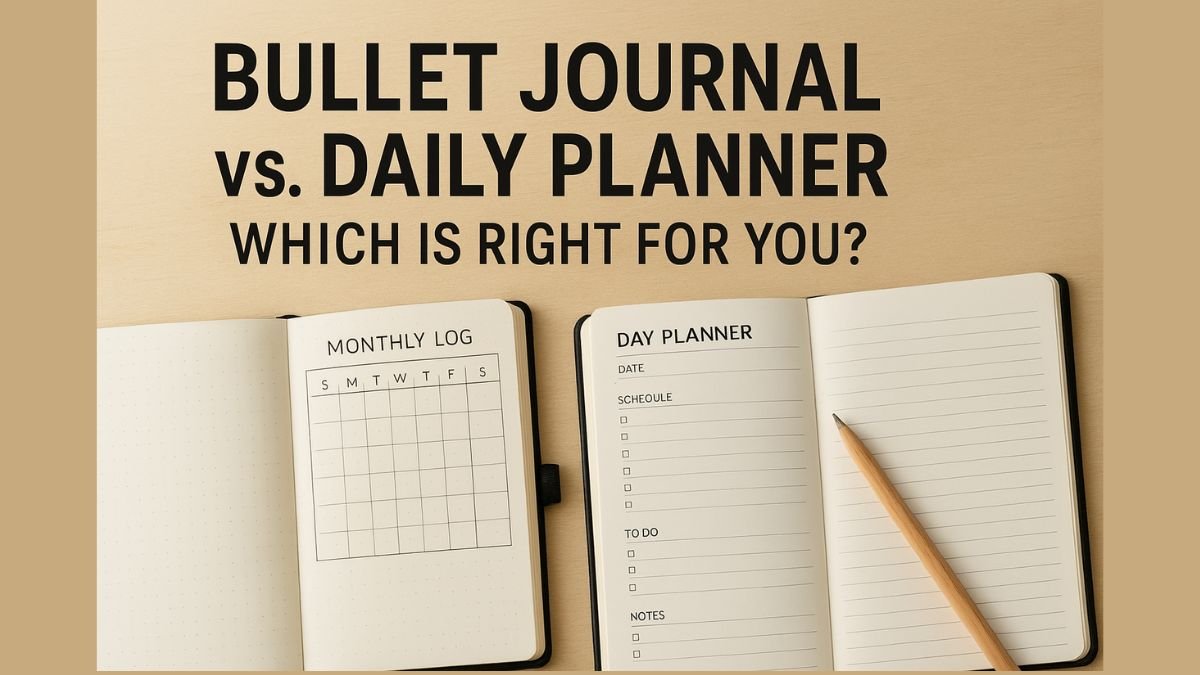
In 2025, staying organized is critical for navigating the demands of work, personal goals, and a fast-paced world. Two popular tools for organization—bullet journals and daily planners—offer distinct approaches to managing your time and tasks. While both can boost productivity, they cater to different preferences, lifestyles, and needs. Inspired by the structured efficiency of high-achievers like Elon Musk, this guide compares bullet journals vs. daily planners to help you decide which is right for you, with practical insights to choose the best system for your 2025 goals.
Understanding Bullet Journals and Daily Planners
Before diving into the comparison, let’s define the two systems:
- Bullet Journal (BuJo): A customizable, analog system created by Ryder Carroll, combining to-do lists, calendars, notes, and trackers in a single notebook. It uses a flexible “rapid logging” method with symbols to organize tasks, events, and notes.
- Daily Planner: A pre-structured tool (paper or digital) designed to plan your day, often with pre-set layouts for tasks, schedules, and goals. It emphasizes daily time management and may include features like time-blocking or app integrations.
Both systems aim to enhance organization, but their approaches differ significantly. Below, we break down their key differences, benefits, and drawbacks to help you choose the best fit.
1. Structure and Flexibility
The biggest difference between bullet journals and daily planners lies in their structure and adaptability.
Bullet Journal
- Structure: Highly flexible and customizable. You create your own layouts, from daily logs to habit trackers, tailoring the system to your needs.
- Pros:
- Perfect for those who want creative control and enjoy designing layouts.
- Adapts to changing needs (e.g., add a project tracker one month, remove it the next).
- Cons:
- Requires time and effort to set up and maintain.
- Can feel overwhelming for those who prefer pre-made formats.
Daily Planner
- Structure: Pre-designed layouts with sections for tasks, schedules, and goals. Digital planners may offer customizable templates but are less flexible than bullet journals.
- Pros:
- Ready-to-use, saving time on setup.
- Ideal for those who want structure without designing from scratch.
- Cons:
- Less flexible for unique needs or creative expression.
- Some layouts may feel restrictive.
Which to Choose? If you’re creative and enjoy personalizing your system, go for a bullet journal. If you prefer a plug-and-play solution, a daily planner (like Daily Planner) is better.
2. Ease of Use
Ease of use depends on your comfort with planning and your available time.
Bullet Journal
- Ease: Requires a learning curve to master the rapid logging system and design layouts. Setup can take 10–30 minutes per week.
- Pros:
- Encourages mindfulness through intentional setup.
- Once mastered, it’s intuitive and adaptable.
- Cons:
- Time-intensive to start and maintain.
- Not ideal for those with limited time or who dislike writing.
Daily Planner
- Ease: User-friendly with pre-set layouts, requiring minimal setup. Digital planners streamline tasks with features like drag-and-drop or reminders.
- Pros:
- Quick to start using, even for beginners.
- Digital options like Daily Planner offer automation and syncing.
- Cons:
- Less room for personalization.
- May feel repetitive for creative users.
Which to Choose? Choose a daily planner for quick, low-effort planning. Opt for a bullet journal if you’re willing to invest time in setup for a tailored experience.
3. Time Management Features
Both systems support time management, but their approaches differ.
Bullet Journal
- Features: Custom time management through daily/weekly logs, time-blocking, or trackers. You design your own schedule layout.
- Pros:
- Flexible time-blocking or calendar setups tailored to your routine.
- Can include goal trackers, habit logs, or project timelines.
- Cons:
- No built-in reminders or automation.
- Requires manual updates and planning.
Daily Planner
- Features: Pre-set layouts for time-blocking, task prioritization, and calendar integration. Digital planners often include reminders and syncing.
- Pros:
- Built-in time-blocking grids or hourly schedules.
- Digital planners sync with Google Calendar or send push notifications.
- Cons:
- Limited flexibility for unique scheduling needs.
- Some paper planners lack space for long-term tracking.
Which to Choose? A daily planner is ideal for structured time management with minimal effort. A bullet journal suits those who want to customize their time-blocking or tracking.
4. Creativity and Personalization
Your personality plays a big role in which system feels right.
Bullet Journal
- Creativity: A creative playground for doodles, stickers, washi tape, and unique layouts. Popular among artists and visual thinkers.
- Pros:
- Encourages self-expression through colors, sketches, and designs.
- Can include mood trackers, vision boards, or inspirational quotes.
- Cons:
- Can lead to perfectionism, slowing down planning.
- Not necessary for those uninterested in creative elements.
Daily Planner
- Creativity: Limited to pre-designed layouts, though some digital planners offer customizable themes or colors.
- Pros:
- Clean, professional look without extra effort.
- Focuses on function over aesthetics.
- Cons:
- Less room for artistic expression.
- May feel generic for creative users.
Which to Choose? Pick a bullet journal if you love creativity and personal touches. Choose a daily planner for a functional, no-fuss approach.
5. Portability and Accessibility
How and where you use your system matters for staying organized.
Bullet Journal
- Portability: A physical notebook, typically A5 or smaller, easy to carry but not as compact as a phone.
- Pros:
- No need for devices or internet access.
- Tactile and distraction-free.
- Cons:
- Bulky compared to digital apps.
- Risk of losing or damaging the notebook.
Daily Planner
- Portability: Paper planners vary in size; digital planners are accessible on phones, tablets, or laptops.
- Pros:
- Digital planners sync across devices for access anywhere.
- Paper planners are tactile but can be compact.
- Cons:
- Digital planners require devices and sometimes internet.
- Paper planners can be cumbersome for travel.
Which to Choose? A digital daily planner like Daily Planner is best for on-the-go access. A bullet journal suits those who prefer analog portability.
6. Cost Considerations
Budget plays a role in your decision.
Bullet Journal
- Cost: Low initial cost (a notebook and pen, ~$10–$30). Optional extras like stickers or premium notebooks can add up.
- Pros: Affordable to start; no recurring fees.
- Cons: Costs increase with decorative supplies or new notebooks.
Daily Planner
- Cost: Paper planners range from $10–$50; digital planners vary from free (e.g., Google Calendar) to subscription-based (~$5–$20/month).
- Pros: Free or low-cost digital options available.
- Cons: Premium digital planners or high-end paper planners can be pricey.
Which to Choose? Bullet journals are budget-friendly for analog users. Daily planners offer free or affordable digital options for tech-savvy users.
7. Best Use Cases
Each system shines in specific scenarios.
Bullet Journal
- Best For:
- Creatives who enjoy designing layouts (artists, writers).
- Those with flexible schedules needing custom trackers.
- People who prefer analog, distraction-free planning.
- Example: A freelancer tracking projects, habits, and personal goals with colorful spreads.
Daily Planner
- Best For:
- Busy professionals or students needing structured, quick planning.
- Tech-savvy users who want syncing and reminders.
- Those who prefer pre-made layouts for efficiency.
- Example: An entrepreneur using Daily Planner for time-blocking and calendar integration.
Making Your Choice
Choose a Bullet Journal If:
- You love creativity and want full control over your system.
- You enjoy analog planning and don’t mind investing time in setup.
- You need a flexible system for unique goals or trackers.
Choose a Daily Planner If:
- You want a ready-to-use system with minimal setup.
- You prefer digital features like syncing, reminders, or integrations.
- You need structured time management for a busy schedule.
Hybrid Option: Try a digital bullet journal (e.g., GoodNotes with a tablet) or a customizable digital planner like Daily Planner to blend creativity with convenience.
Getting Started
- Bullet Journal: Grab a notebook (e.g., Leuchtturm1917) and start with basic rapid logging (tasks, events, notes). Watch tutorials for layout ideas.
- Daily Planner: Test a digital planner like Daily Planner for time-blocking and syncing, or pick a paper planner like Passion Planner for structure.
Whichever you choose, consistency is key. Use your system daily, review weekly, and adjust as needed to stay organized and productive in 2025.
Hi, I’m Sam Thomas. I love writing about productivity and simple ways to stay organized in daily life. Through this blog, I share practical tips, planners, and ideas that have helped me stay on track. My goal is to make planning easy and useful for everyone.