- How a Daily Planner Can Help You Survive a Career Transition
- 1. Create a Transition Dashboard
- 2. Reverse-Engineer Your Timeline
- 3. Time-Block Deep Work Sessions
- 4. Track Applications and Follow-Ups
- 5. Schedule Networking and Skill Building
- 6. Protect Mental Health and Energy
- 7. The “One Thing” Daily Rule
- 8. Weekly Transition Review
- 9. Financial Runway Tracker
- 10. Celebrate Milestones
- Ready-to-Use Career Transition Daily Template
- Related Posts
How a Daily Planner Can Help You Survive a Career Transition
Career transitions — whether voluntary (new role, industry shift, promotion) or involuntary (layoff, burnout, relocation) — rank among life’s most stressful events. The uncertainty, self-doubt, financial pressure, and emotional rollercoaster can feel overwhelming.
A daily planner becomes your lifeline during this period. It transforms vague anxiety into structured action, turning a chaotic transition into a manageable, purposeful journey. Here’s exactly how to use a daily planner to survive — and thrive — during a career transition.
1. Create a Transition Dashboard
Start with one overview page that serves as your command center.
How to Do It:
- List your “Why” for the change, target roles/companies, timeline, key milestones, skills gap analysis, and financial runway.
- Review this page every Sunday during your weekly prep.
Why It Helps: It keeps the big picture visible when daily emotions run high, preventing panic and drift.
2. Reverse-Engineer Your Timeline
Work backwards from your ideal outcome date.
How to Do It:
- Set your target “New Role Start” date, then create internal deadlines 2–4 weeks earlier.
- Break into monthly, weekly, and daily actions (e.g., “Update resume,” “Send 5 networking messages”).
- Block these in your planner immediately.
Why It Helps: Reverse planning removes the overwhelm of “Where do I even start?”
3. Time-Block Deep Work Sessions
Career changes require focused effort on applications, skill-building, and networking.
How to Do It:
- Block 1–2 protected “Deep Work” sessions daily (e.g., 9–11 AM for applications or learning).
- Use color-coding and treat these blocks as non-negotiable.
- Use a digital planner like Daily Planner for recurring protected blocks.
Why It Helps: Deep work blocks ensure real progress instead of scattered reactive tasks.
4. Track Applications and Follow-Ups
Random applications lead to random results.
How to Do It:
- Maintain a running tracker: Company, Role, Date Applied, Status, Follow-up Date.
- Schedule follow-ups 7–10 days after applying.
- Log outcomes and lessons.
Why It Helps: Systematic tracking prevents opportunities from falling through the cracks.
5. Schedule Networking and Skill Building
Networking and upskilling are often neglected without structure.
How to Do It:
- Block specific time for outreach (e.g., “Send 5 LinkedIn messages: 4 PM”).
- Schedule learning blocks (e.g., “Coursera module: 30 min daily”).
- Track connections made and skills practiced.
Why It Helps: Consistent small actions compound into major career momentum.
6. Protect Mental Health and Energy
Transitions drain emotional energy — plan recovery deliberately.
How to Do It:
- Track daily energy/mood (1–10 scale) to spot patterns.
- Include “Rest Days” or lighter blocks during high-stress periods.
Why It Helps: Protecting energy prevents burnout and maintains clarity for decision-making.
7. The “One Thing” Daily Rule
On overwhelming days, focus on one high-impact action.
How to Do It:
- Write your single most important task at the top of each daily page in bold.
- Complete it first before anything else.
Why It Helps: One clear win per day builds confidence and momentum when everything feels uncertain.
8. Weekly Transition Review
Every Sunday, conduct a short structured review.
How to Do It:
- What progress was made?
- What felt hardest and why?
- What needs adjustment next week?
- Celebrate one win (no matter how small).
Why It Helps: Weekly reflection prevents weeks from blurring together and allows course correction.
9. Financial Runway Tracker
Money stress amplifies career anxiety.
How to Do It:
- Track monthly expenses, savings, and runway (months left).
- Schedule side income or freelance tasks if needed.
- Review and adjust spending goals monthly.
Why It Helps: Financial visibility reduces panic and supports better career decisions.
10. Celebrate Milestones
Transitions are long — celebrate progress to stay motivated.
How to Do It:
- Log milestones (10 applications sent, first interview, offer received).
- Plan small rewards and write them next to the milestone dates.
Why It Helps: Rewards create positive reinforcement during a difficult period.
Ready-to-Use Career Transition Daily Template
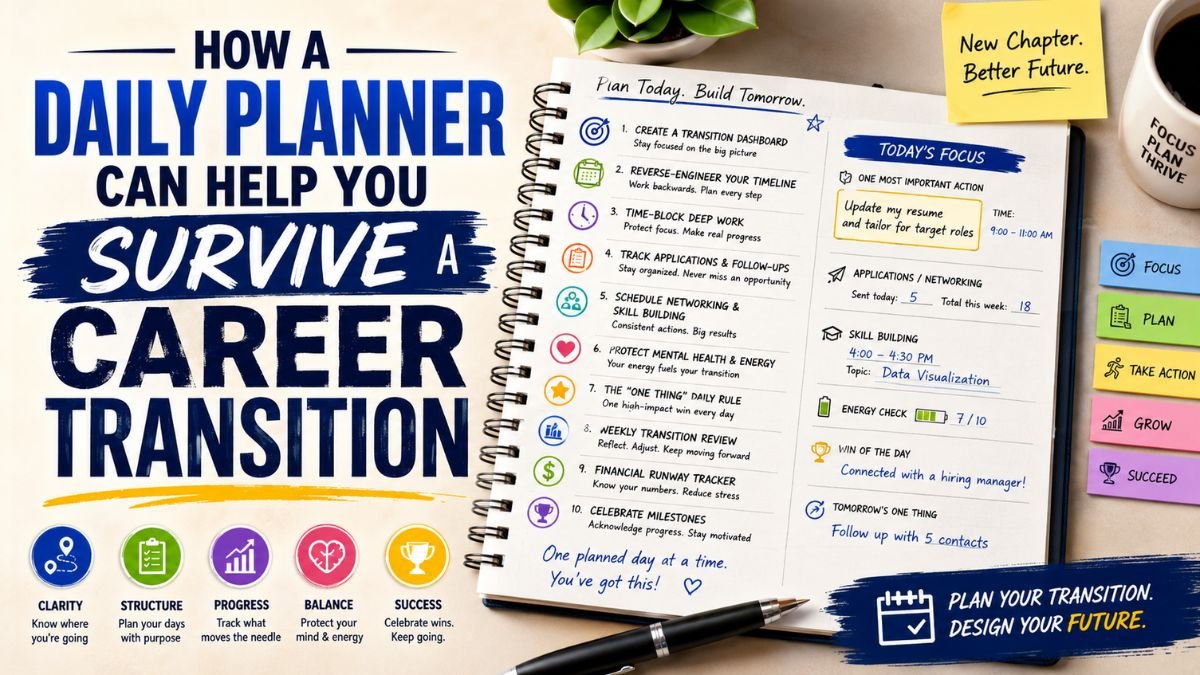
CAREER TRANSITION DAY – Date: _________

My Why: ____________________________________

One Most Important Action Today:
→ ____________________________________   Time: ____ – ____

Applications / Networking:
Sent today: ____   Total this week: ____

Skill Building: ____ – ____   Topic: ________________

Energy Check: ____ / 10

Win of the Day: ________________________

Tomorrow’s One Thing: ________________________________
A career transition doesn’t have to feel like free-falling.
With a daily planner, it becomes a deliberate, structured journey toward something better.
Your next chapter is waiting — start planning it today.
For a seamless digital experience with milestone trackers, interview prep templates, and financial dashboards, try Daily Planner.
You’ve got this. One planned day at a time.

Hi, I’m Sam Thomas. I love writing about productivity and simple ways to stay organized in daily life. Through this blog, I share practical tips, planners, and ideas that have helped me stay on track. My goal is to make planning easy and useful for everyone.