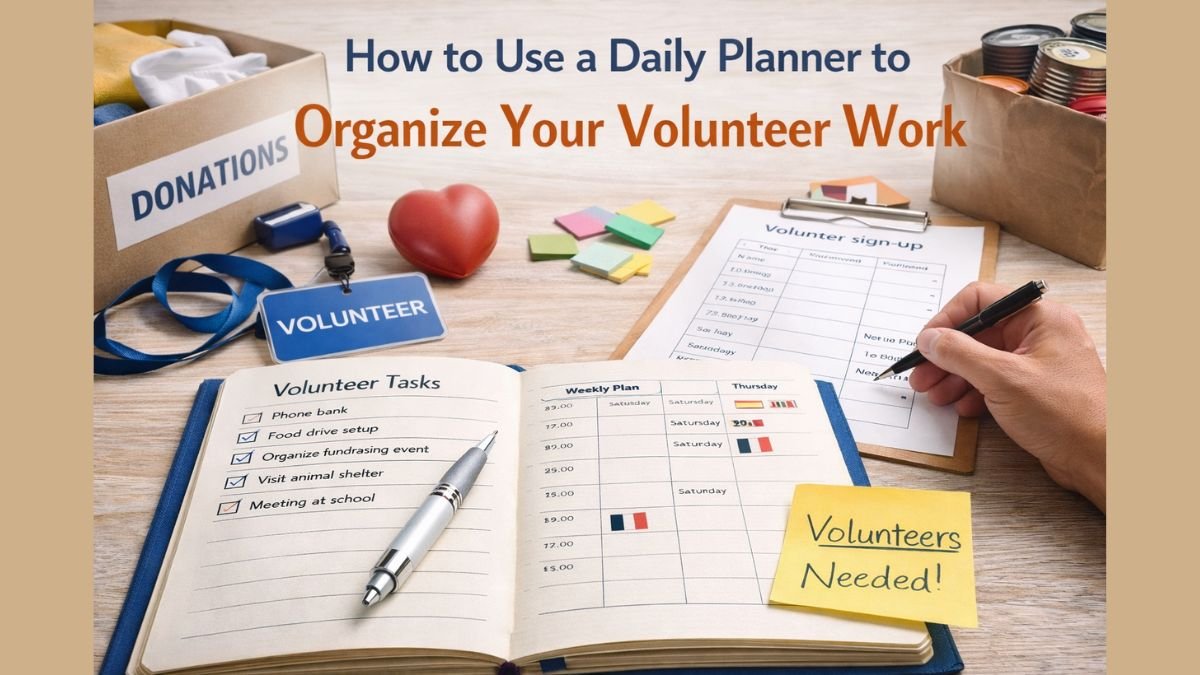
Volunteering in 2026 is more rewarding than ever, but it can quickly become chaotic without structure—missed shifts, forgotten commitments, and burnout from over-scheduling. A daily planner is the perfect tool to keep your volunteer work organized, impactful, and sustainable, while balancing it with your job, family, and personal life. Inspired by the disciplined time management of high-achievers like Elon Musk, this guide shows how to use a daily planner to organize your volunteer work with 10 practical strategies.
Why a Daily Planner Is Essential for Volunteers
Volunteer work often involves irregular schedules, multiple organizations, and emotional investment. A daily planner provides the structure to track commitments, prepare effectively, and reflect on your impact, ensuring you give your best without overwhelming your life. Below are 10 ways to make it work for you.
1. Create a Volunteer Overview Section
Start with a big-picture view of your volunteer commitments to avoid conflicts and stay motivated.
How to Do It:
- Dedicate a page in your planner for an overview: list organizations, roles, regular shifts (e.g., “Food bank: Tuesdays 6–8 PM”), and contact info.
- Note key events, like fundraisers or training sessions.
- Use a digital planner like Daily Planner to set recurring reminders for shifts.
Why It Helps: An overview prevents double-booking and keeps all volunteer info in one place.
2. Time-Block Volunteer Shifts and Prep Time
Treat volunteer commitments like non-negotiable appointments to ensure you show up prepared.
How to Do It:
- Block shifts in your planner, e.g., “Soup kitchen shift: Saturday 10 AM–1 PM.”
- Add prep and travel time, like “Pack supplies: Friday 8 PM” or “Drive time: 30 min.”
- Include buffer time for unexpected extensions or debriefs.
Why It Helps: Time-blocking respects your volunteer role, reducing last-minute stress.
3. Schedule Related Tasks
Volunteer work often involves follow-ups, training, or admin—use your planner to stay on top.
How to Do It:
- Block tasks like “Email coordinator about next shift” or “Complete online training module: 7–8 PM.”
- Set reminders for recurring duties, like monthly reports or supply checks.
- Use a digital planner for links to training materials or forms.
Why It Helps: Scheduling tasks ensures nothing falls through the cracks, making you a reliable volunteer.
4. Track Your Impact and Reflections
Volunteering is meaningful—capture it in your planner to stay motivated and measure growth.
How to Do It:
- Add a reflection section after shifts, e.g., “Highlights: Helped 50 families” or “Learned: Better communication skills.”
- Track hours or contributions for resumes or personal fulfillment.
- Use a monthly summary to review total impact.
Why It Helps: Reflections reinforce purpose, preventing burnout and highlighting growth.
5. Balance with Personal and Work Life
A planner helps you integrate volunteering without overwhelming other areas.
How to Do It:
- Schedule volunteer tasks around work and family, e.g., “Volunteer meeting: Wednesday after work.”
- Limit commitments, like “Max 2 shifts/week,” and note it in your planner.
- Use color-coding: blue for volunteer, green for family, red for work.
Why It Helps: Balance prevents resentment and sustains long-term volunteering.
6. Plan for Variable Schedules
Many volunteer roles have flexible or on-call shifts—a planner keeps you ready.
How to Do It:
- Block potential slots, like “On-call for animal shelter: Evenings available.”
- Create a “Volunteer Prep Kit” checklist for quick responses.
- Adjust blocks weekly based on availability.
Why It Helps: Flexibility ensures you can say yes when needed without chaos.
7. Coordinate with Team or Group Volunteers
If volunteering involves others, use your planner to stay aligned.
How to Do It:
- Note group meetings or shared tasks, like “Team planning call: Thursday 7 PM.”
- Track your responsibilities, e.g., “Bring supplies for event.”
- Share key dates via your digital planner if it has collaboration features.
Why It Helps: Coordination makes group efforts smoother and more effective.
8. Set Volunteer Goals and Track Progress
A planner turns volunteering into purposeful growth by setting and tracking goals.
How to Do It:
- Define goals, like “Volunteer 100 hours this year” or “Learn grant writing skills.”
- Break into monthly targets and daily actions, e.g., “Research grants: 30 min/week.”
- Use a progress tracker for hours or skills gained.
Why It Helps: Goals add direction, making volunteering more fulfilling.
9. Prepare for Events and Special Projects
Big volunteer events require planning—use your planner to stay ahead.
How to Do It:
- Create a countdown, e.g., “Fundraiser: 2 weeks away — confirm role today.”
- Block prep tasks, like “Make signs: Weekend” or “Recruit volunteers: Call list.”
- Include post-event reflection, like “What went well?”
Why It Helps: Preparation ensures events succeed and you contribute fully.
10. Review and Adjust Your Commitment
Regular reviews help you sustain volunteering without overload.
How to Do It:
- Schedule monthly reviews: “Assess volunteer load — too much?”
- Reflect on energy and impact, adjusting shifts if needed.
- Celebrate milestones, like “Completed 50 hours!”
Why It Helps: Reviews keep volunteering joyful and sustainable.
Tips for Volunteering with a Daily Planner
- Choose Your Planner: Paper for quick notes during shifts or digital like Daily Planner for reminders and syncing.
- Start Simple: Begin with scheduling shifts and one reflection per week.
- Plan Weekly: Dedicate time to review upcoming volunteer commitments.
- Stay Flexible: Adjust for last-minute opportunities or cancellations.
- Make It Meaningful: Add photos or notes from volunteer experiences for motivation.
Why a Daily Planner Elevates Your Volunteering
A daily planner transforms volunteer work from sporadic efforts into organized, impactful contributions. By scheduling shifts, tracking impact, and balancing commitments, it ensures you give meaningfully without burnout. In 2026, make your volunteering count—start with a planner.
For a seamless digital experience, try Daily Planner, with customizable templates, reminders, and trackers to support your volunteer journey. Organize your giving today, and make a bigger difference tomorrow.

Hi, I’m Sam Thomas. I love writing about productivity and simple ways to stay organized in daily life. Through this blog, I share practical tips, planners, and ideas that have helped me stay on track. My goal is to make planning easy and useful for everyone.